Measure the Water Your Gaiwan Actually Holds
Turn a kitchen-scale reading into a practical brewing volume, then scale a recipe without treating the vessel's advertised capacity as your pour size.
Read the guide ↗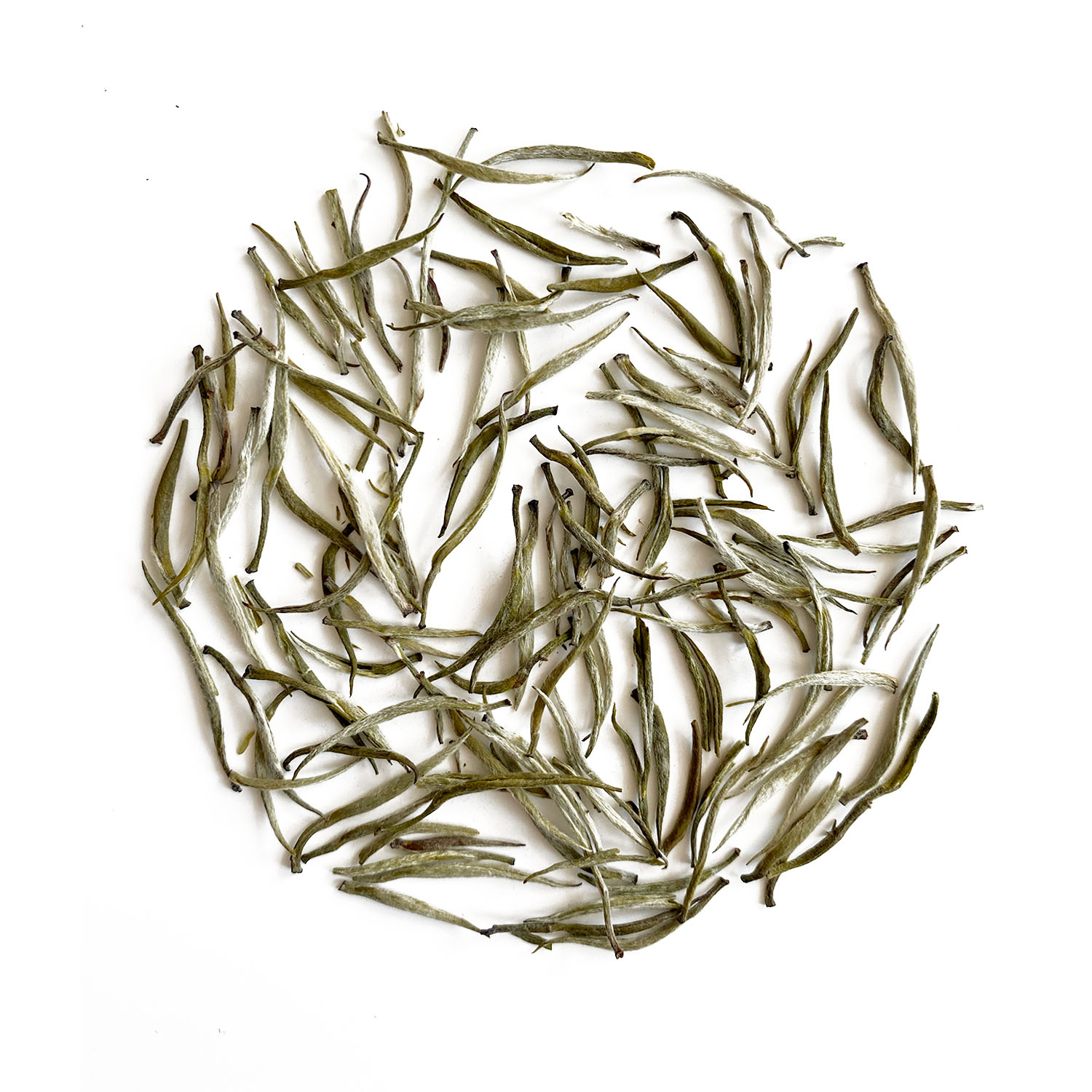
白毫银针
A spring white tea from Fuding, Fujian, made with the Da Bai cultivar. The downy buds are withered and dried rather than pan-fired. The supplier describes a delicate, sweet cup with a silky texture; a clear glass lets you watch the buds open.
Supplier flavor description; your experience can vary.
In stock when checked 30 October 2026. Final stock and price are confirmed at checkout.
Choose a pack and quantity, then add it to your KongMing shopping cart. Delivery and the available payment methods are confirmed at checkout. Shipping & returns
| Province | Fujian |
|---|---|
| Region | Fuding (600m) |
| Harvest | 2026 |
| Season | Spring |
| Cultivar | Da Bai |
| Supplier SKU | W0001-白毫银针 |
3 g tea / 500 ml water · 80 °C · 90 seconds.
For 150 ml, proportional scaling gives 0.9 g: 3 × 150 ÷ 500. This preserves the listed ratio, rather than predicting the best flavor.
5 g tea / 100 ml water · 80 °C · 30 seconds.
For 150 ml, proportional scaling gives 7.5 g: 5 × 150 ÷ 100. This preserves the listed ratio, rather than predicting the best flavor.
These starting points come from the supplier listing, not a tasting test by KongMing. Adjust one variable at a time and record what you notice.
Scale a recipe, time a steep, and save your notes ↗| Sample 15 gram (0.5 oz) | $3.74 USD |
|---|---|
| 70 gram (2.5 oz) | $14.95 USD |
| 200 gram (7 oz) SAVE 10% | $38.42 USD |
| 400 gram (14 oz) SAVE 15% | $72.66 USD |
| 1 KG (2.2 lbs) SAVE 20% | $170.88 USD |
Checked 30 October 2026. Options, promotions, and stock may change. Supplier information source ↗
Practical methods to measure, compare, and keep a repeatable brewing record.
Turn a kitchen-scale reading into a practical brewing volume, then scale a recipe without treating the vessel's advertised capacity as your pour size.
Read the guide ↗Compare leaf-to-water ratios, convert them to your own vessel and see why a large-pot recipe and a gongfu recipe need different timing.
Read the guide ↗A small comparison protocol for recording your own observations, changing one brewing variable and deciding what to try next.
Read the guide ↗